
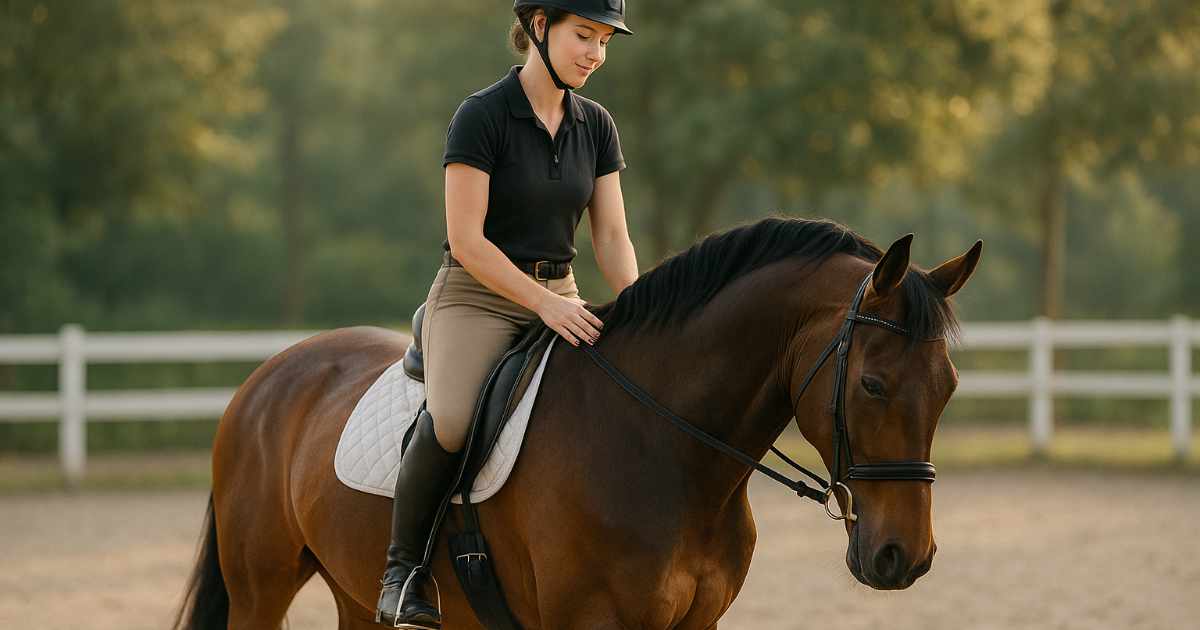
Training horses is often seen as a physical process… conditioning the body, building skills, refining technique. But beneath every trot transition, jump or collected canter lies something just as important… if not more so: emotional balance.
This balance isn’t just about keeping your cool when things go wrong. It’s about recognising how your own internal state affects your horse… and how your horse’s emotions influence yours. When rider and horse are emotionally regulated, they move together with softness, focus and trust. When they’re not… even the best techniques can fall apart.
In this article, we’ll explore the link between emotional regulation and performance… through the lens of neuroscience, horsemanship and wellness tools. You’ll discover how calming your nervous system helps your horse regulate theirs… and why that might just be the secret to your best training sessions yet.
It Starts With the Nervous System
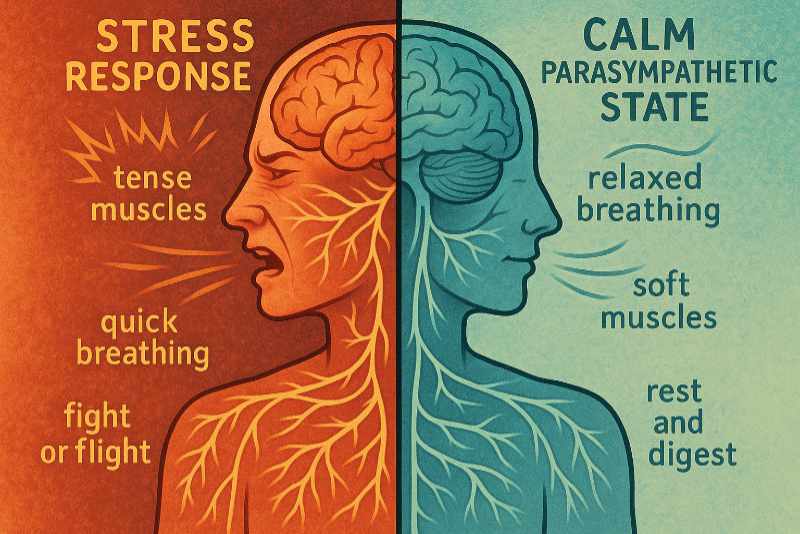
Let’s begin with the science. Both humans and horses have a nervous system made up of two key branches: the sympathetic (fight or flight) and the parasympathetic (rest and digest).
These systems are constantly working to keep us safe. When the brain detects danger… real or imagined… it activates the sympathetic response. Muscles tense. Breathing quickens. The body gets ready to react.
In humans, that might look like frustration, overthinking or snapping at your horse. In horses, it can show up as spooking, bolting or shutting down.
The parasympathetic system, on the other hand, helps us slow down, process information and connect. This is where learning, trust and subtle communication happen.
In training, we want both horse and rider to spend as much time in that calm, parasympathetic state as possible. But if either one becomes dysregulated, the connection breaks.
Why Your Emotions Matter More Than Your Aids
You may have heard the saying, “Your horse doesn’t care how much you know until they know how much you care.” There’s truth in that… but let’s take it further.
Your horse doesn’t just care about your feelings… they react to them.
Horses are masters at reading body language, breathing patterns, tension and energy. They evolved this way as prey animals… constantly scanning for subtle signs of danger. That means they notice:
- A shallow breath
- Tight shoulders
- A clenched jaw
- Frustration bubbling under the surface
You can ride with perfect position and precise aids, but if your emotional energy says “I’m stressed” or “I’m not present,” your horse will respond accordingly.
On the flip side, when you’re grounded and calm, your horse feels safer. They can focus. They can learn. They become more willing and more trusting… not because of the cue you gave, but because of the way you gave it.
Rider Regulation = Horse Regulation
Let’s look at a simple example. Imagine a rider schooling a green horse. The horse balks at a corner and hesitates. The rider gets tense. She tries again, with a firmer leg. The horse resists. The rider breathes faster and tightens her grip. The horse gets more anxious. And so on…
Now imagine the same rider takes a breath. She softens her body. She allows a few extra seconds for the horse to process. Her energy says, “No rush. I’m with you.” The horse tries again… this time with more confidence.
What changed? Not the training method. Just the emotional tone.
The Mirror Effect: Horses Reflect What We Bring
Have you ever had a bad day and gone to the paddock… only to find your horse more reactive or shut down than usual?
It’s not coincidence. Horses mirror our emotions, not just in body language but in brain activity. Studies show that horses can synchronise their heart rates and nervous system states with the humans around them. This is known as emotional co-regulation.
When you’re calm, your horse has a better chance of becoming calm too. When you’re dysregulated, your horse may either absorb that tension or go into self-protection mode.
This is why working on your own emotional balance isn’t just self-care… it’s part of your training toolkit.
Wellness Tools That Support Emotional Balance
So, how do we become more emotionally balanced in the saddle and on the ground? It’s not about being emotionless or perfect. It’s about awareness, regulation and self-kindness.
Here are some accessible tools that can help both you and your horse:
1. Breathwork
Slow, conscious breathing signals your nervous system to shift into a calmer state.
Try this before mounting:
- Inhale for 4 counts… hold for 4… exhale for 6.
- Repeat three times.
- You’ll feel more grounded and your horse will feel the difference too.
2. Body Scanning
Tension hides in the body. Try a quick check-in before riding or handling your horse:
- Are your shoulders up near your ears?
- Is your jaw tight?
- Are you gripping the reins or lead rope?
Take a moment to release those areas. A relaxed rider helps create a relaxed horse.
3. Groundwork with Intention
Groundwork isn’t just for manners… it’s a chance to build connection through shared calmness.
Exercise to try:
- Walk your horse in hand at a slow pace. Match your breath to your steps. Stay present.
- Notice when your horse begins to match your rhythm or soften their eyes. That’s co-regulation in action.
4. PEMF and Red Light for Emotional Recovery
Just as these tools support the physical body, they can help the nervous system too. PEMF therapy and red light can ease muscular tension and reduce cortisol (the stress hormone), making it easier for both horse and rider to let go of nervous energy after a tough day or a demanding training block.
5. Mindfulness and Reflection
Sometimes, emotional imbalance comes from pressure… pressure to perform, to succeed, to prove something.
Taking time to reflect… without judgment… helps. Ask yourself:
- Am I training from curiosity or control?
- What emotions am I bringing into the arena today?
- What does my horse need from me, emotionally?
A journal, a trusted coach or even quiet paddock time can help you find those answers.
Performance and Connection Go Hand in Hand
In competition, emotional regulation can be the difference between a clear round and a refusal. Between a fluid dressage test and a distracted one. Between a safe cross-country run and a scary one.
But even outside the show ring, the benefits are just as real. Horses trained with emotional connection are:
- More responsive
- More consistent
- Less reactive
- More enjoyable to ride and handle
Because the foundation of all good horsemanship isn’t just feel or timing… it’s presence.
Emotional Balance Is Trainable
Just like leg yield or flying changes, emotional regulation is a skill. It’s not something you’re born with or without. You can practice it, improve it and turn it into a reliable tool.
Start with five minutes of breathwork a day. Or a weekly check-in with your horse where you do nothing but observe, breathe and connect. Slowly, your emotional fitness will grow… and your horse will thank you.
The Real Secret to Success? Harmony
There’s no magic cue or perfect aid that makes horses learn faster. There’s no shortcut to trust. But when you and your horse are both emotionally balanced… everything becomes smoother.
Commands become conversations. Pressure becomes guidance. And training becomes something both of you look forward to.
So next time you step into the arena, ask yourself… not just what you want to teach your horse… but what energy you’re bringing to the lesson.
Because the real secret to training success isn’t just what you do.
It’s how you feel while doing it.
